What does being a successful woman mean in today's day and age?
- newspaper59
- Feb 27
- 3 min read
Charlotte Figler, 27
Every day, successful women get up and many go to their jobs, which they have worked their entire lives to achieve. 33% of those women are childless (Hewlett). Most of these women have not chosen to be childless; most have to be. Having a successful job, a happy husband, and a couple of children is society's standard for “having it all”. But is having children, a successful job, and a happy husband really what all women want? Or is this just the societal standard of “having it all”? Can women even achieve this realistically today?
According to a study by the Harvard Business Review, 79% of successful men want children, and 75% of them have children. The reality is that the more successful a man is, the more likely he is to have children. Women are facing the same challenges of being successful, high-achieving workers, but with some added responsibilities. For starters, there is a wage gap between men and women. In the US, women only earn 78% of the wage that men do. According to Figure 1, this fluctuates depending on the state. On top of making less, according to statistics, some husbands don’t help out around the house, with homework, cooking, cleaning, or any of the necessities for a stable home (See Figure 2). 43% of high-achieving women believe that their husbands actually create more housework for them than actually contributing (Hewlett). On top of women having to work harder to make the same wage men do, they also have to go home at night and do all the housework, unless they are fortunate enough to have someone to help out.

Figure 1: This figure shows the year-round female earnings as a percent of what the men make
What does “having it all” even mean? For me personally, I believe that how you feel in your current state should drive your career and social life. Samhita Mukhopadhyay from Time Magazine describes how she had her dream job as an executive editor of Teen Vogue, with a fancy office, and a new handbag every week. Beneath this perfect image though, was a sick father, a nonexistent dating life, and she was extremely unhappy overall. While this life might be someone's dream, it was not hers. She believes checking in with yourself and assessing where you are is essential to having a happy and healthy lifestyle. Looking at this from a teenager's perspective, I feel the same way. Sometimes I think about what I should be doing with my life, instead of assessing where I am or if I am genuinely happy with what I am doing. Not worrying about external pressures from society and people around you is necessary to “having it all”, on your own terms.
Reflecting on the data, I realized that “having it all” is a generalization made by society and in reality is not possible. Having it all is society's standards of what a successful woman SHOULD look like, not what they actually WANT to look like. A stable husband, three kids, and a corporate job is only what some women want, not every single one. On top of this, America hasn’t reached a place where men and women are considered “equal” enough to where women can meet the standards of success, without running themselves completely dry and out of energy by the time they are 40. If a woman does wait to have children until she feels stable enough, she will then face problems of infertility, which leads to disappointment and the feeling of missed opportunity. Women below 30 have a 25% chance of getting pregnant, women who are 30 have a 20% chance, and women above 40 have just a 5% chance. I am not saying that women are not capable of balancing being a mother and a high-achieving worker, there are plenty of examples of this. I believe that for the majority of women, the definition of success has been outlined to impossible standards that are seemingly unable to reach. I believe the most important part of being a successful woman today is measuring the place you’re in in your life and how it contributes to your happiness.
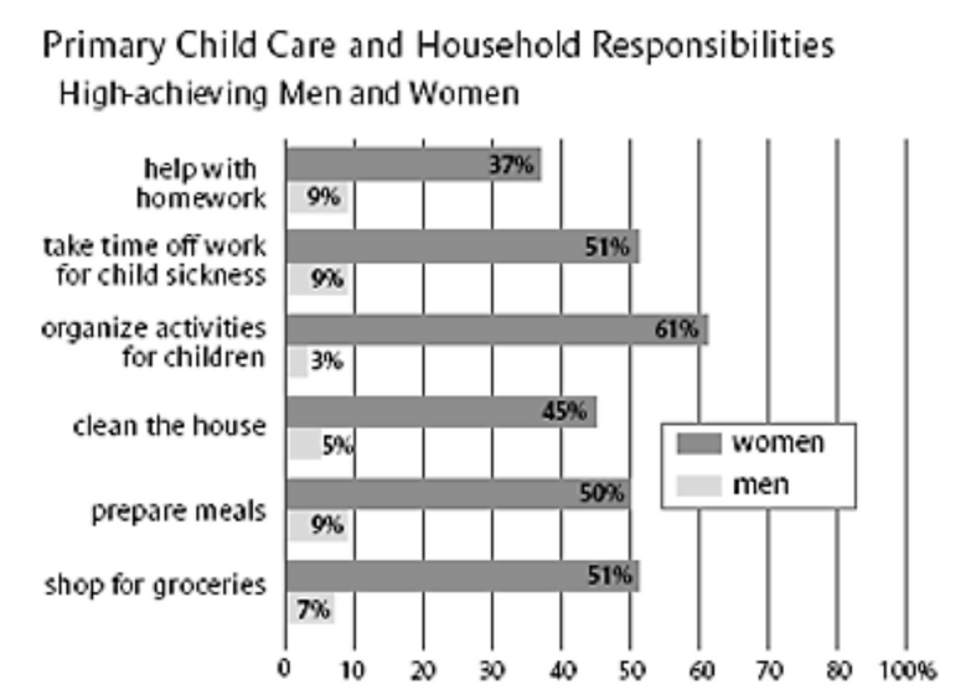
Figure 2: This chart shows the percent of high-achieving men and women and the household responsibilities they take care of.


